Who Is Louis Arneb in Re:Zero?
Louis Arneb is Re:Zero's hidden Gluttony Sin Archbishop, a Hall of Memories dweller whose Arc 6 downfall leads to her later identity as Spica in canon.

Louis Arneb is Re:Zero's hidden third Sin Archbishop of Gluttony: the youngest of the Gluttony triplets, a girl whose consciousness originally exists inside the Hall of Memories rather than in an ordinary body. In Arc 6, she steals Subaru's memories, discovers Return by Death, and tries to turn his existence into her route to a "perfect" life. The plan catastrophically backfires. After the Watchtower conflict, a physically embodied but emptied-out Louis appears, and the source material later gives that girl a new name, Spica, without erasing the moral weight of who Louis used to be.
Her Arc 6 breakdown explains why Louis calls Subaru a monster.
Spoiler warning: This article covers Arc 6 in full and major Arc 7 through Arc 10 source-material developments, including Louis's later identity and status.
Louis is the hidden third Archbishop of Gluttony
Gluttony is unusual among Re:Zero's Sin Archbishop positions because it is represented by three siblings. Ley Batenkaitos, Roy Alphard, and Louis Arneb are triplets, with Louis as the youngest sister. Ley pursues carefully chosen lives like a "gourmet," while Roy consumes far more indiscriminately. Louis embodies satiation: she has access to enormous quantities of other people's lives and still cannot feel fulfilled.
That difference defines her. Ley and Roy have bodies and move through the world. Louis begins with neither freedom. She survives on the names and memories her brothers consume, sampling stolen lives and using secondhand experiences to build a sense of self.
She is also unusually secretive even by Witch Cult standards. Her situation keeps her largely outside ordinary reality. Eventually she discovers that she can take control of one brother's body while he is displaced, temporarily letting her experience the physical world. That is why Louis can participate in events even when the body involved belongs to Ley or Roy.
Ley and Roy are not her clones or puppets. They are distinct siblings with their own personalities and appetites, connected to Louis through family and Gluttony.
Why Louis lives in the Hall of Memories
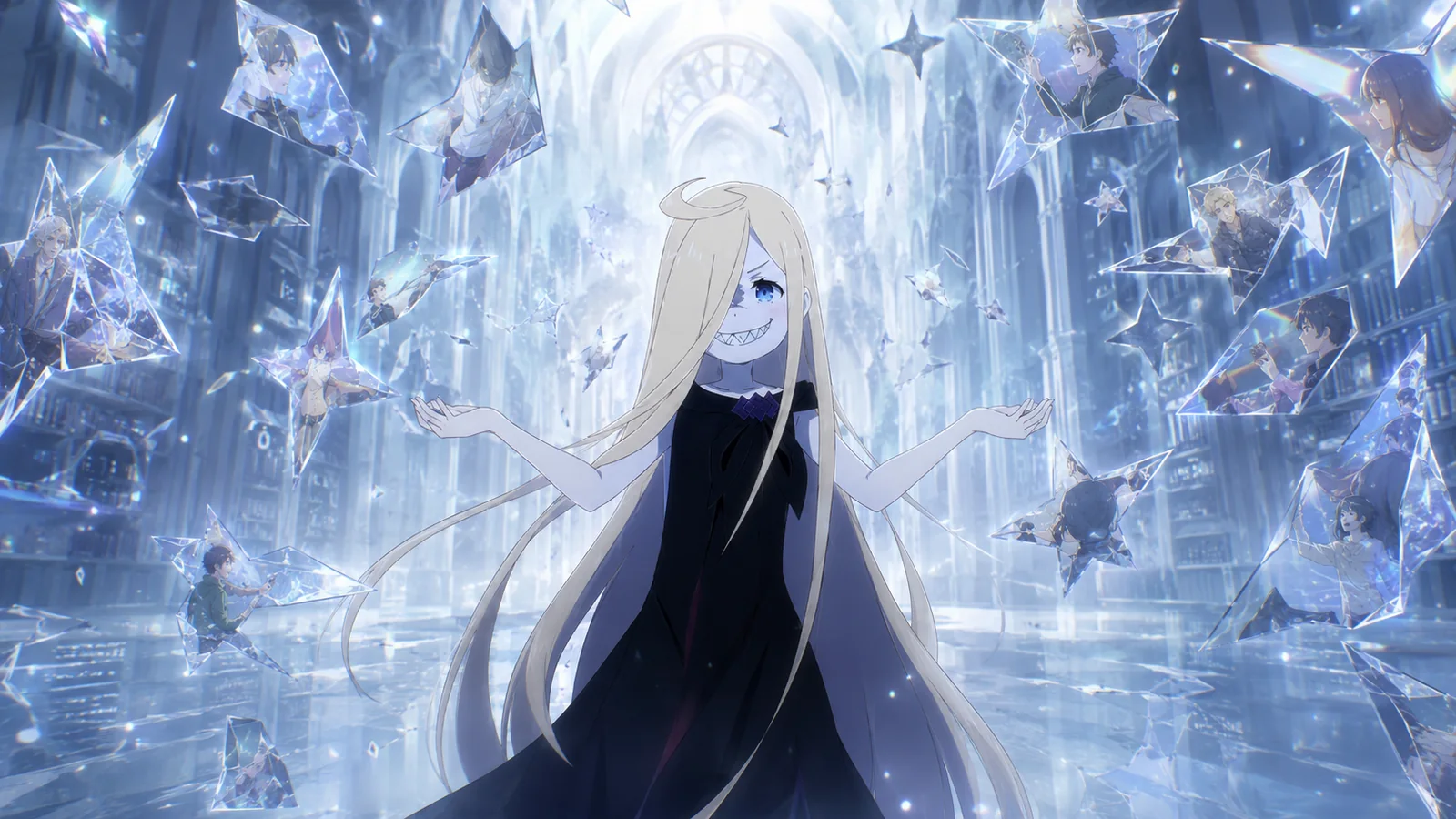
Louis's defining abnormality is that she has no freely functioning physical life at the start of her story. Since birth, her consciousness has existed in the vast white space called the Hall of Memories, also rendered in some translations as the Corridor of Memories. She can possess memories of walking, eating, fighting, and loving, yet those recollections belong to lives consumed by Gluttony rather than experiences she personally lived.
That creates the contradiction behind her satiation. Louis has consumed countless lives, but none is actually hers. She judges other people's choices with the confidence of someone who has seen innumerable outcomes while lacking the embodied experience that would make those judgments meaningful. Her real hunger is for a life she can call her own.
The Hall is tied to Re:Zero's deeper machinery of souls, Od Lagna, and the Books of the Dead. Louis describes it as a place associated with the processing of the dead. However, later web-novel material preserves uncertainty about what the Hall truly is. Subaru remembers Louis's explanation but recognizes that she was not necessarily an infallible guide to its cosmology. Her claims should therefore be treated as informed in-story testimony, not a complete divine rulebook.
How Gluttony, Lunar Eclipse, and Solar Eclipse work
The Authority of Gluttony can consume a person's name, memories, or both. Those losses damage identity in different ways: stolen memories attack the victim's own continuity, while a stolen name can remove that person from other people's recognition and recollection.
Lunar Eclipse and Solar Eclipse are applications built from what Gluttony has already consumed, not separate Witch Factors.
Lunar Eclipse
Lunar Eclipse draws skills, knowledge, and techniques from stolen memories. The user can reproduce what a victim knew, but the user's existing body may lack the strength, speed, reach, or other physical qualities needed to perform those techniques at full effectiveness.
Solar Eclipse
Solar Eclipse goes further. Using a consumed name, Gluttony can reproduce the victim more completely, including the body associated with those abilities. That makes much fuller use of the person's physical skills possible.
Ley and Roy dislike or fear Solar Eclipse because becoming someone else so completely can pull their thoughts and identity toward the reproduced person. Louis reacts differently. She begins without a normal body and with a self assembled from borrowed lives, so the possibility of becoming someone else looks less like self-erasure and more like a path to finally possessing a life.
Why Subaru becomes Louis's ideal target in Arc 6
Louis's fixation begins when she consumes Subaru's memories in the Hall of Memories. She discovers something unlike any life her brothers have brought her: Subaru remembers dying repeatedly and continuing from earlier points in time.
Louis initially interprets Return by Death through her own worldview. She wants a life in which mistakes, bad luck, and painful outcomes can be corrected. Subaru therefore seems to possess the ultimate answer. If fatal choices can be retried, she imagines, a user should be able to construct the best possible life.
The flaw is that Louis has observed death only as memory. She has not personally endured the terror, pain, grief, and accumulated trauma that make Return by Death so destructive.
She therefore goes beyond merely stealing Subaru's memories. Louis concludes that she cannot simply eat his deeper Witch Factors, so she splits her own Witch Factor-linked existence into two versions. One remains in the Hall; the other joins the amnesiac Subaru from within. Her scheme is to alter Subaru into a sufficiently different "meal," consume him again, and ultimately appropriate the existence and powers she covets.
Subaru's amnesia is therefore part of Louis's attempt to break down and reconfigure the person whose life she wants.
Why Louis's Arc 6 plan destroys her worldview
Louis's fatal mistake is assuming that knowing Subaru's deaths and living them are equivalent. While embedded in him, she is carried through Return by Death herself. The difference is unbearable.
The deaths do not feel like convenient checkpoints. They feel like death. Louis experiences the pain, terror, loss, and certainty of extinction that Subaru repeatedly survives psychologically even when time rewinds. Her fantasy of Return by Death as an optimization tool collapses, and Subaru's ability to continue afterward becomes horrifying to her.
That reversal exposes the weakness in Louis's philosophy. She begins as a spectator who ranks other people's lives and assumes she could live them better. Once forced to experience Subaru's suffering from the inside, she desperately wants out.
Subaru's eventual recovery should not be simplified into "Louis gives his memories back." His restoration is tied to the Books of the Dead, the confrontation between his amnesiac self and his prior memories, and their reintegration. Louis loses control of her experiment, but she does not benevolently reverse it.
Arc 6 also leaves the three Gluttonies in sharply different states. Ley is killed, Roy is captured, and Louis receives the strangest outcome: the previously bodiless girl appears in the physical world but no longer displays the calculating personality, speech, or apparent memories of the Sin Archbishop. The old Louis is removed as an active mastermind without a conventional boss death.
Is the post-Arc-6 Louis the same person?
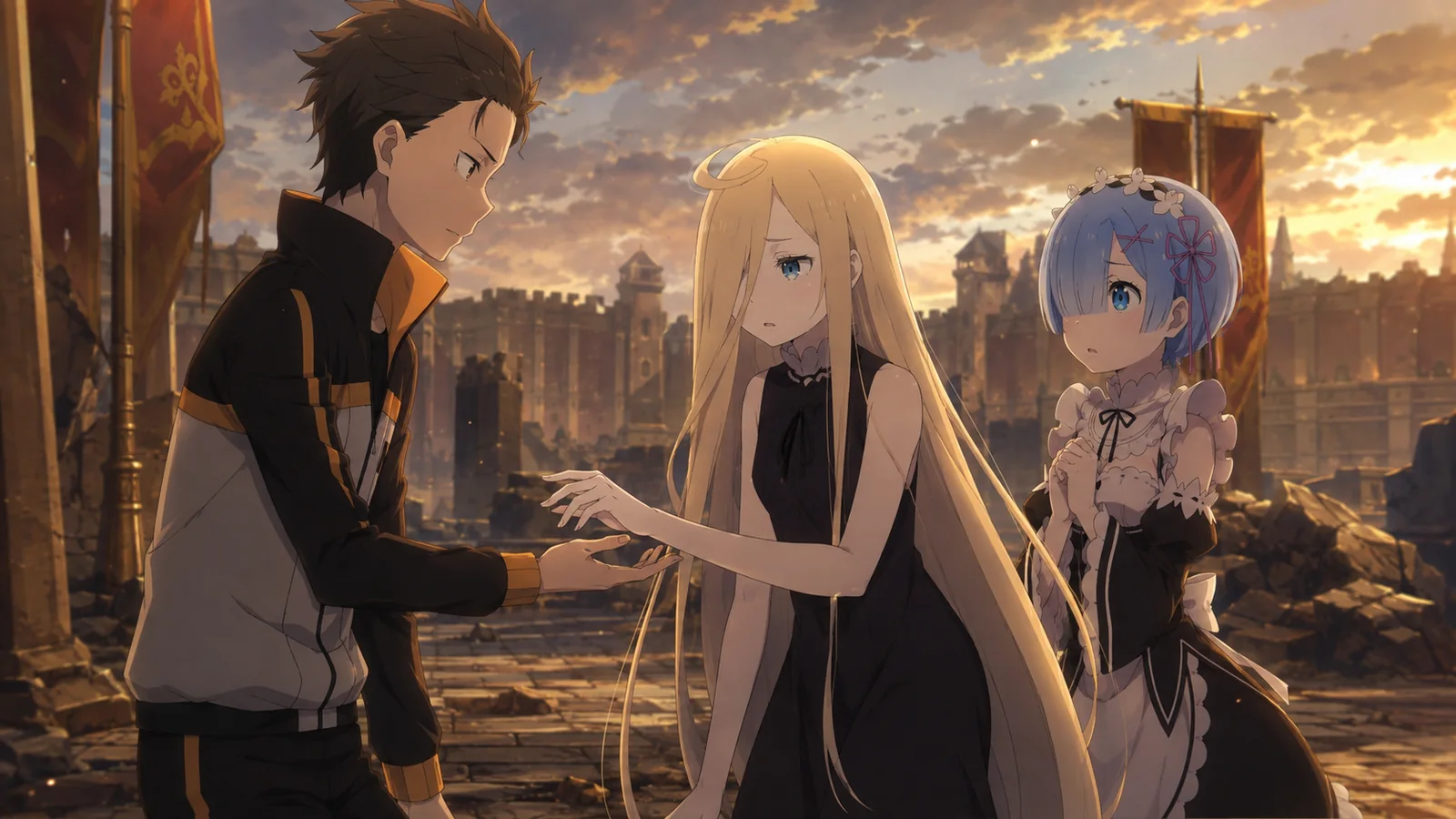
Arc 7 turns that ambiguity into a moral problem. Subaru, Rem, and the childlike Louis are displaced into the Vollachian Empire. Subaru knows what Louis Arneb did and initially regards her as a dangerous enemy. Rem, lacking her own earlier memories, encounters the present child rather than the Archbishop Subaru remembers.
The girl cannot properly explain herself, behaves much younger than the old Louis, and repeatedly protects or supports the people around her. The story does not ask readers to pretend her earlier crimes never happened. Instead, it asks how identity and responsibility should be understood when the person in front of everyone no longer possesses the same conscious self.
Arc 8 makes that tension explicit. Subaru offers the girl the name Spica as part of choosing a new way to live. The new name is not a declaration that Louis Arneb's history has vanished. It marks a future the girl can choose while the narrative simultaneously treats her past as a burden that cannot simply be discarded. Subaru's position is not instant forgiveness; he hopes to reach a point where forgiveness may become possible.
Later web-novel narration sharpens the metaphysical framing without fully explaining the mechanism. Subaru reflects that Louis's consciousness disappeared and that she was reborn as Spica. That makes "Spica is merely an unrelated look-alike" a poor description of current canon. Yet the text still has not provided a complete technical account of how Louis's former consciousness, Witch Factor, physical manifestation, and new self connect.
The most precise description is that Spica is Louis's later, reborn identity, with a genuinely different conscious self but an inescapable connection to Louis Arneb's existence and crimes.
What Spica does with Gluttony
Spica's later use of Gluttony reinforces the difference between continuity and repetition. She retains power rooted in the same Sin Archbishop history, but her purpose changes.
During the Vollachian catastrophe, she develops an application called Star Eating in the web novel, a term sometimes rendered with eclipse-related wording in fan translations. Rather than consuming ordinary lives as trophies, Spica uses it against the resurrected dead, helping release souls trapped in an unnatural second existence so they can return toward the world's normal cycle.
That does not retroactively purify Gluttony or prove that Spica is morally absolved. Its significance is directional: a power once used to strip identity from victims is being used to free people from an imposed state. Re:Zero frames that as movement toward atonement, not a shortcut around accountability.
After Arc 8, Spica chooses to remain in Vollachia for a time to deal with remaining resurrected dead. Current web-novel material still treats her as alive and as Spica, while looking back on Louis as the consciousness from which she was reborn. Her ultimate destination remains unresolved.
Where Louis stands in the anime, light novel, web novel, and manga
The Re:Zero anime introduces Louis as part of its Arc 6 adaptation rather than leaving her exclusively in the novels. Season 4 begins with the Loss Arc before moving into the Recapture Arc, but the light novel remains the complete source for the Hall of Memories revelations and Louis's later aftermath.
The light novel is the principal commercial source version. Its Arc 6 volumes establish Louis's role at the Pleiades Watchtower, while later Japanese volumes continue the Vollachian story in which her identity becomes the Spica question. Availability in official English translation can lag the Japanese novels, so "light-novel canon"and"currently available in English" are not always identical categories.
The web novel supplies the latest wording for later developments discussed here, including Arc 10's explicit reflection that Louis's consciousness is gone and that she was reborn as Spica. Because the light novel can revise presentation and details, that wording should not be treated as a guarantee that every future light-novel or localized line will be identical.
The manga adaptations cover earlier story material and do not form a separate Louis continuity that overrides the novels. Existing films and OVAs likewise do not establish an alternate version of her identity. Any anime adaptation of the post-Arc-6 Spica material remains unconfirmed unless the production officially announces it.