Does Jinshi Become Emperor?
Jinshi does not become emperor in The Apothecary Diaries. His royal blood, Gyokuyou's heir, and Volume 8 brand explain why succession still threatens him.

No. The established light-novel succession arc does not make Jinshi emperor. He remains one of the most dangerous possible claimants in the imperial family, but that is different from actually taking the throne. The story repeatedly puts him close enough to succession for the possibility to shape his choices, then shows how aggressively he tries to remove himself from that path.
The key is that Jinshi has two identities. Publicly, he is Ka Zuigetsu, the Emperor's much younger brother and the Moon Prince. Secretly, his blood relationship to the Emperor is even closer: Jinshi is the Emperor and Ah-Duo's biological son, switched at birth with the baby officially treated as the imperial younger brother. That hidden truth makes him more dangerous as a claimant, but it does not automatically rewrite the official succession record.
By the events through Volume 16, Gyokuyou's son holds the formal position of Crown Prince, while Jinshi remains a royal alternative whom factions can still rally around. That unresolved pressure is why Volume 8 matters so much.
Why Jinshi Is a Viable Heir Even as the Emperor's "Younger Brother"
Jinshi does not need the secret of his birth to be politically threatening. His public identity already places him inside the imperial family.
As Ka Zuigetsu, he is recognized as the Emperor's younger brother. In a court where male heirs have repeatedly died young and dynastic stability matters more than personal preference, an adult imperial brother is an obvious fallback. Jinshi is educated, healthy, politically experienced, and trusted with serious state responsibilities.
That is why "he is only the Emperor's brother" does not remove him from the succession problem. Before Gyokuyou gives birth to a healthy son, Jinshi occupies an especially dangerous position: if the Emperor lacks a secure male successor, officials can look toward the nearest viable adult royal.
The irony is that Jinshi understands this. Much of his political life is spent trying to stop other people from turning his birth into a throne he does not want.
The Hidden Truth Makes His Claim Stronger, Not Simpler
Ah-Duo gave birth to the Emperor's child at roughly the same time the Empress Dowager gave birth to the Emperor's younger brother. The infants were switched. The child publicly raised as the imperial younger brother is actually the Emperor and Ah-Duo's son, while the true younger brother died in infancy.
That makes Jinshi the Emperor's son by blood, not his brother.
For a deeper breakdown of that reveal, see Does Jinshi Know Ah-Duo Is His Mother?.
This does not mean the court can simply announce that Jinshi is the eldest son and crown him. The swap is a state-shaking secret. Jinshi's public identity, the legitimacy of past imperial decisions, Ah-Duo's position, the Empress Dowager's history, and the standing of other heirs are tied to it.
So the biological truth strengthens Jinshi's potential claim while making any formal correction far more explosive.
Gyokuyou's Son Changes the Succession Order
The major shift comes after Gyokuyou safely gives birth to a son.
By Volume 5, Gyokuyou has been elevated to Empress, and Jinshi can no longer continue living behind his rear-palace eunuch persona. Gyokuyou's son becomes the Crown Prince, giving the Emperor a publicly recognized male heir from his Empress.
That is the succession Jinshi wants protected.
The Crown Prince's existence does not make Jinshi irrelevant. A young heir can become the center of factional arguments over regency, maternal lineage, and who is considered suitable to rule. Later volumes make that pressure explicit: some officials consider alternatives to Gyokuyou's son, including Jinshi and Lihua's son.
For the Empress's side of that shift, see Does Gyokuyou Become Empress?.
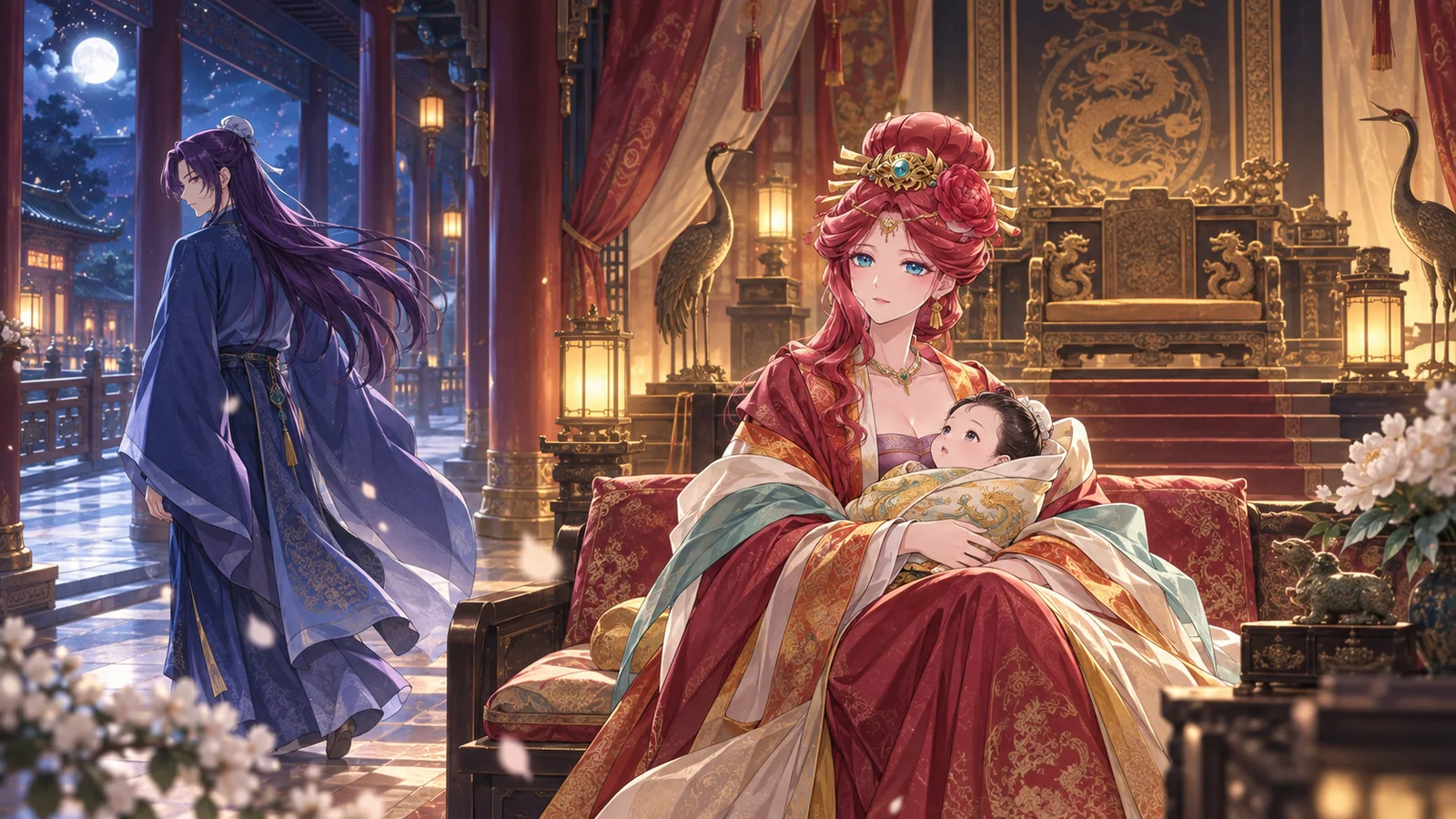
Jinshi Has Spent Years Trying Not to Become Crown Prince
Jinshi's resistance is not a sudden decision in Volume 8. Volume 8 looks back to the choice he made at thirteen, after the former emperor's death placed him in the Crown Prince position. Jinshi challenged the Emperor to Go and won the right to enter the rear palace as the apparent eunuch "Jinshi" instead. The point of the wager was explicit: he wanted to abandon the succession role.
That early bargain defines his later behavior. He is willing to serve the state, but he keeps trying to separate public duty from the throne others want to impose on him.
The strategy has limits. Jinshi can hide his status from much of the rear palace, but not from the people who govern. Once political events force him to act openly as Ka Zuigetsu, the succession question follows him again.
His problem is structural: Jinshi can refuse the throne, but he cannot stop other people from wanting him on it.
What Happens in Volume 8: Jinshi Brands Himself
Volume 8 turns Jinshi's refusal into something physical and permanent.
During a private confrontation involving Jinshi, the Emperor, Empress Gyokuyou, and Maomao, the succession issue comes to a head. Jinshi wants to make it unmistakable that he will not become Gyokuyou's political enemy or displace her son.
He then brands his own body with Gyokuyou's seal.
The act is extreme because words have failed. Jinshi has already rejected the throne, but personal preference is weak currency in dynastic politics. A prince can change his mind. An emperor can overrule him. A faction can speak in his name. A marriage can create a new bloc around him.
The brand is Jinshi's attempt to create a fact that cannot be politely ignored.
Symbolically, he places himself beneath Gyokuyou rather than above her. Instead of presenting himself as the man who might replace her son, he marks himself as someone committed to her side. If succession factions try to turn him into the Crown Prince's rival, they are acting against the declaration Jinshi has carved into his own body.
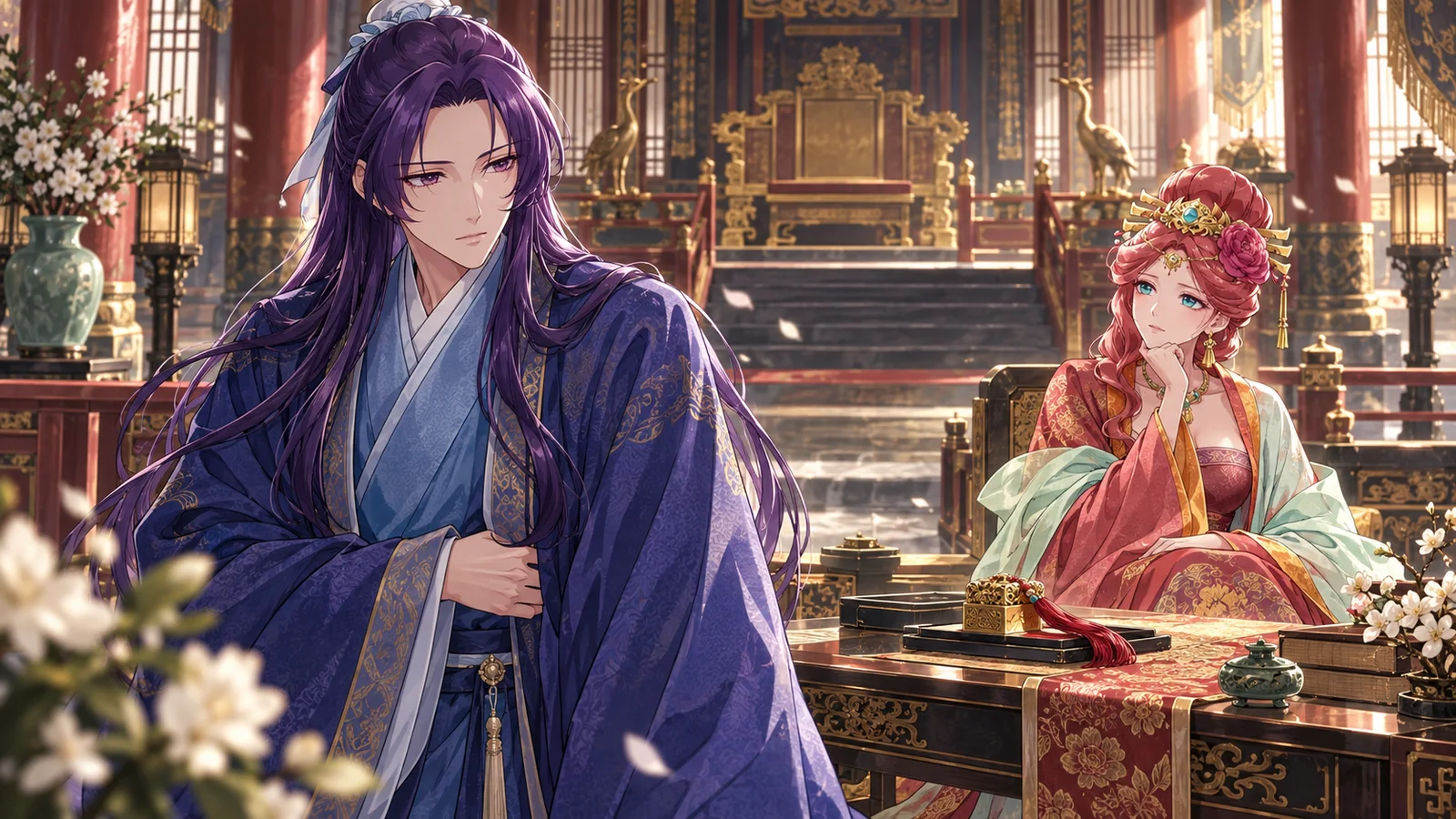
The Brand Is Not a Magical Abdication
The brand does not legally remove Jinshi from succession forever.
Nothing in the scene establishes a magical rule, supernatural contract, or automatic constitutional mechanism. The mark does not alter Jinshi's blood, erase his public title, rewrite the imperial genealogy, or prevent the Emperor from making political decisions.
It is better understood as a political declaration and self-disqualification attempt.
Jinshi is trying to make enthroning him humiliating, contradictory, and dangerous. If he bears Gyokuyou's mark, presenting him as the figure who should supplant her son becomes harder to frame as a clean transition. The brand also shows how far Jinshi will go rather than accept the role others keep preparing for him.
But "harder"is not the same as"legally impossible." Later tensions prove the difference. Jinshi continues to be discussed as a possible alternative within succession politics. If the brand functioned as binding abdication law, that pressure would disappear.
The Succession Arc After Volume 8
The later novels keep Jinshi near the throne without placing him on it.
| Canon milestone | What changes for Jinshi |
|---|---|
| Volume 5 | Gyokuyou becomes Empress after bearing a son; Jinshi resumes public duties as an imperial prince. |
| Volume 8 | Jinshi brands himself with Gyokuyou's seal in an extreme attempt to reject a future that would threaten her son. |
| Volume 13 | Court factions consider alternatives to Gyokuyou's young Crown Prince, including Jinshi. |
| Volume 14 | Rival political blocs sharpen around questions of bloodline and Gyokuyou's line. |
| Volumes 15-16 | The Emperor's illness makes succession more urgent, but the Emperor survives surgery and Jinshi is not crowned. |
That progression is why the answer is no without pretending the succession question is meaningless. Jinshi does not become emperor in these established milestones, yet his status remains politically explosive.
Explicit Canon, Character Inference, and Theory
Explicit canon
Jinshi is publicly the Emperor's younger brother. His hidden biological parentage makes him the Emperor and Ah-Duo's son. Gyokuyou gives birth to a son who becomes Crown Prince. Jinshi repeatedly resists being positioned as successor. In Volume 8, he brands himself with Gyokuyou's seal. Later factions still treat him as a possible royal alternative. By Volume 16, the Emperor remains alive after surgery and Jinshi has not taken the throne.
Character inference
The strongest reading of the brand is that Jinshi is trying to protect Gyokuyou's succession line by making himself politically unusable as her son's rival. It also fits his broader desire to stop his birth from dictating his identity.
That interpretation is strongly supported by the surrounding conflict, but it is not a written law stating that a branded prince can never inherit.
There is also a personal layer. Jinshi knows that becoming a serious throne candidate would drag anyone close to him into factional politics, including Maomao. His refusal therefore protects more than his own freedom.
Theory
Any claim that Jinshi must eventually become emperor, or that the brand guarantees he never could under any circumstances, goes beyond what the established light novels prove.
The canon gives him a viable blood claim, a viable public royal claim, powerful supporters and opponents, and a deep personal refusal. It preserves tension between those facts without completing a Jinshi coronation.
So, Does Jinshi Become Emperor?
No. The established light-novel succession arc does not crown Jinshi.
Gyokuyou's son is the formal Crown Prince, and Jinshi spends years trying to prevent himself from becoming the alternative around whom rival factions can organize. His secret parentage makes that harder because, by blood, he is the Emperor's son.
Volume 8 is the clearest statement of Jinshi's intent. Branding himself with Gyokuyou's seal is a drastic declaration that he will not willingly become the enemy of Gyokuyou or her child. It is meant to disqualify him politically and morally in the eyes of anyone trying to use him.
But the brand is not a spell, and it is not an automatic legal renunciation of succession. Jinshi remains royal and politically useful to factions.
That is the point of the arc: the danger is not that Jinshi secretly wants to be emperor. It is that the imperial system may keep treating him as a possible emperor no matter how clearly he says no.