Does Gyokuyou Become Empress?
Yes. Gyokuyou becomes Empress after giving birth to a son. Here is how Volume 5 confirms it and why the promotion reshapes Jinshi's succession stakes.

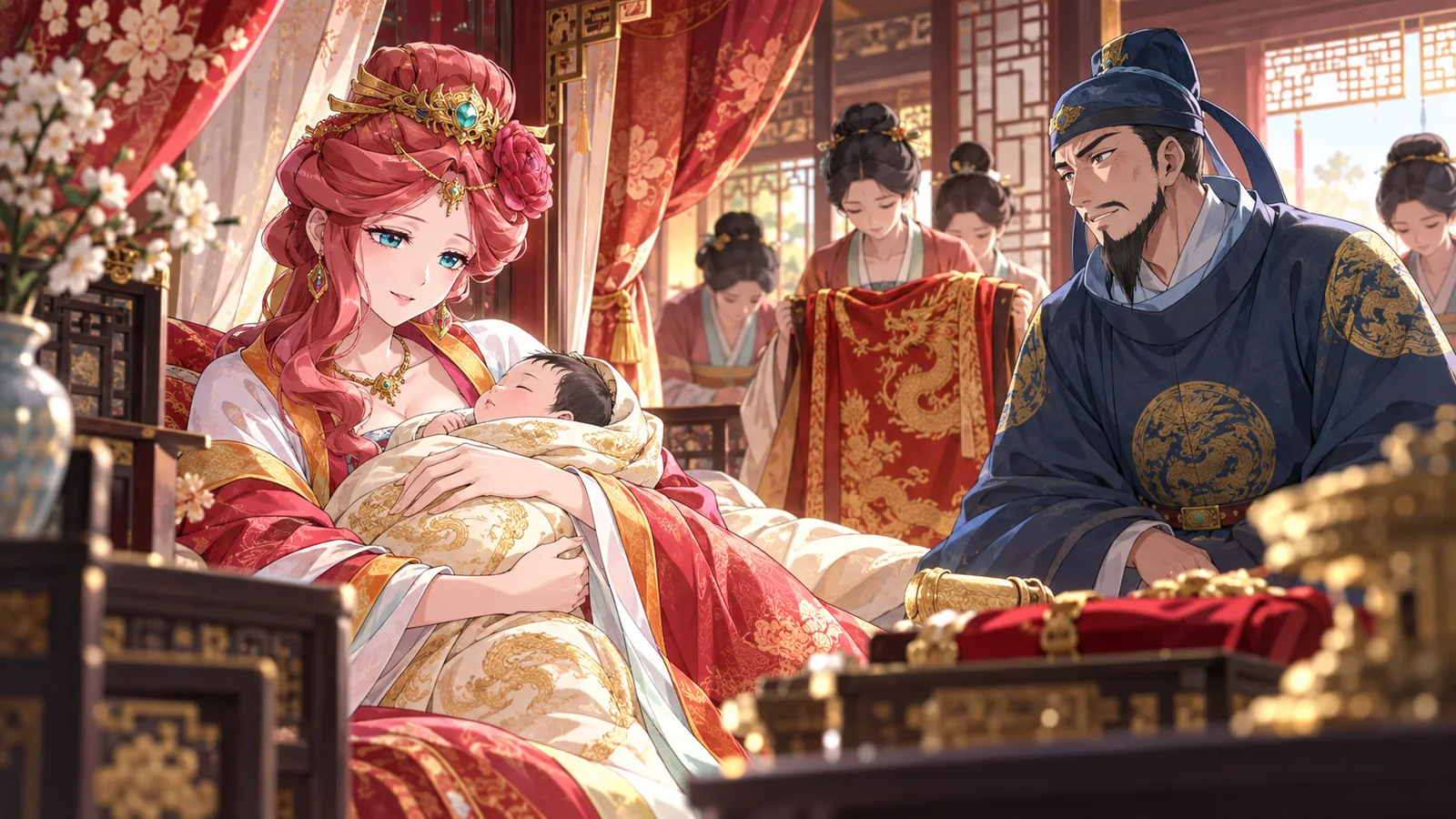
Yes. Gyokuyou becomes Empress in The Apothecary Diaries. The clearest confirmation comes with light novel Volume 5: after Gyokuyou gives birth to the Emperor's son, her status is raised from high-ranking consort to Empress. The licensed English publisher synopsis explicitly connects the prince's birth with her elevation, and the original Japanese publisher summary describes her becoming the Emperor's principal wife after the prince is born.
That distinction matters. Gyokuyou does not merely become a more influential consort. She moves into a formally different position at the top of the rear palace hierarchy, while her newborn son becomes a central figure in the struggle over who may eventually inherit the throne.
Volume 5 Explicitly Confirms Gyokuyou Becomes Empress
There is no ambiguity in the light novel milestone that answers the question.
Volumes 3 and 4 center heavily on Gyokuyou's pregnancy and the danger surrounding it. Because she is one of the Emperor's most important consorts, the pregnancy is politically sensitive even before the child's sex is known. Maomao is brought back into Gyokuyou's service, and the Jade Pavilion becomes a guarded medical and political space as the pregnancy progresses.
By Volume 5, the situation has changed. Gyokuyou has given birth to a son, and the official J-Novel Club synopsis states that the birth has seen her elevated to Empress. Square Enix's English print synopsis says the same thing in even more direct causal terms: the birth of Gyokuyou's son earns her the title of Empress.
The Japanese publisher summary also marks the transition. After the Shi clan crisis is resolved and an imperial prince is born, Gyokuyou becomes the Emperor's principal wife. That is the same political promotion expressed through the original terminology.
So the answer is not an interpretation based on palace etiquette. It is an explicit light novel development.
What Was Gyokuyou Before She Became Empress?
Before her promotion, Gyokuyou is one of the four highest-ranking consorts in the rear palace and lives in the Jade Pavilion.
Official franchise materials describe her as one of the Emperor's most favored high consorts. Within the rear palace's ranked structure, the four top consorts stand above the lower and middle ranks, receive their own pavilion residences, and maintain dedicated attendants. Gyokuyou already has prestige, access to the Emperor, and a household large enough for Maomao to serve as both lady-in-waiting and food taster.
But even a top consort is still a consort.
The franchise's own terminology guide distinguishes that rank from the Empress. The Empress is the Emperor's principal wife and stands at the summit of the women in the rear palace. In other words, Gyokuyou moves from being one of several elite women near the top to occupying the singular position above the consort hierarchy.
That is why "Empress"is the correct English term here, not"queen." The political world of The Apothecary Diaries is an imperial court, and the licensed English light novel uses Empress for Gyokuyou's new title.
Why the Birth of a Son Changes Gyokuyou's Position
Gyokuyou already has an imperial daughter, but the birth of a prince changes the stakes around her household.
The most important point is not simply that she has another child. It is that she has produced a male member of the imperial line who can become the focus of succession politics. Volume 5 makes the connection explicit by placing the prince's birth and Gyokuyou's elevation in the same political transition.
Her promotion therefore accomplishes two things at once.
First, it formalizes Gyokuyou's own relationship to the Emperor. She is no longer merely one highly favored consort among the four leading consorts. She becomes his principal wife.
Second, it strengthens the political position surrounding her son. A prince born to the Empress carries a different court significance from a child whose mother remains one consort among several. That does not mean the boy automatically and permanently becomes the uncontested heir. Later volumes make clear that succession remains a political question. But his birth creates a credible dynastic center around Gyokuyou's branch of the imperial household.
This is why the promotion is much bigger than a romantic reward for being the Emperor's favorite. It changes the court's calculations about family, legitimacy, alliances, and the future of the throne.
What Becoming Empress Changes Inside the Rear Palace
Inside the rear palace, Gyokuyou's elevation changes the hierarchy itself.
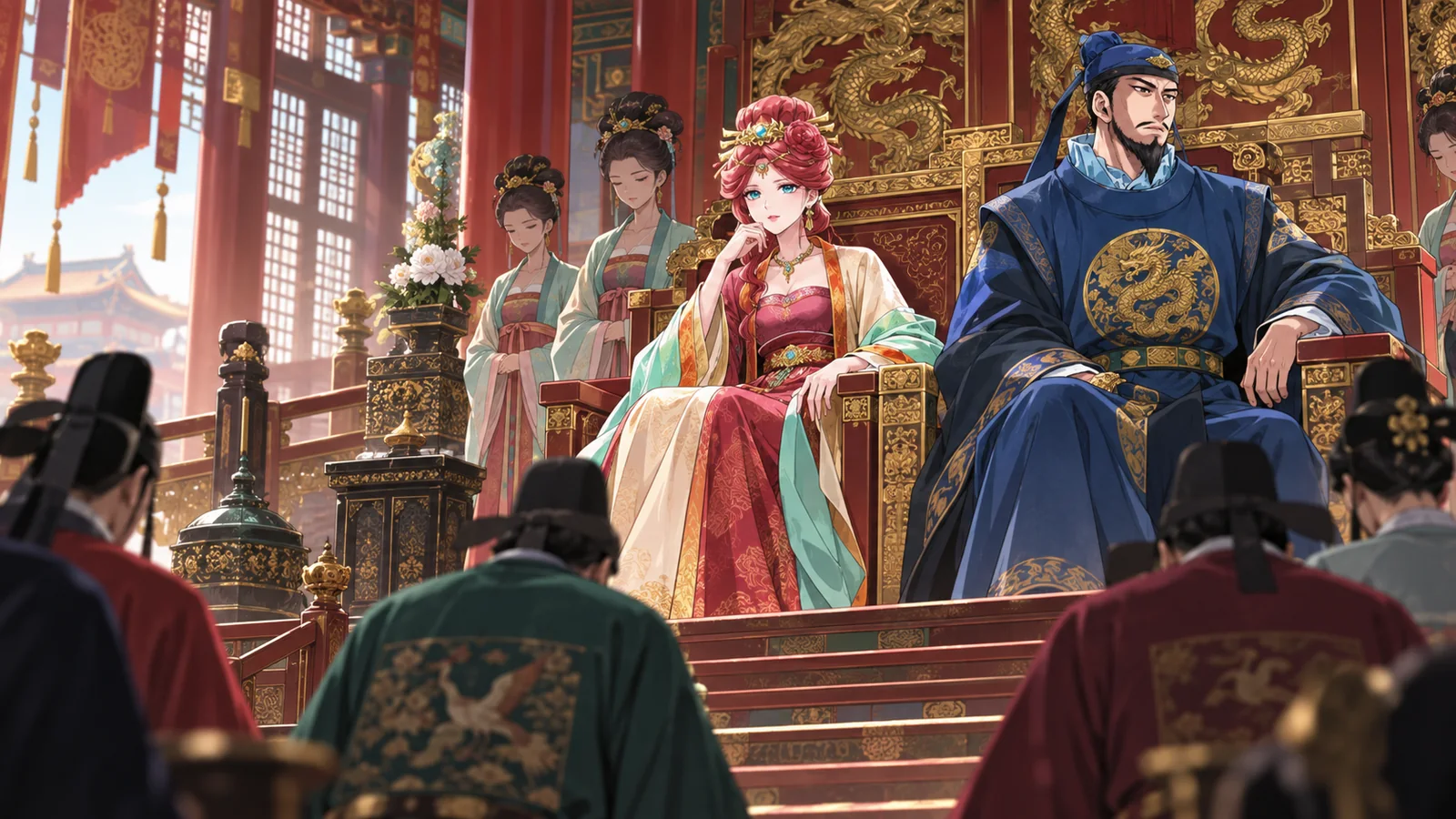
The official anime terminology guide describes the Empress as the Emperor's principal wife, the "mother of the nation," and the woman who stands at the top of the rear palace. The four high-ranking consorts occupy prestigious positions, but the Empress is above that group.
For Gyokuyou, that means she is no longer operating simply as the Jade Pavilion's high consort competing within the same tier as women such as Lihua. Her household becomes attached to the highest female office in the imperial family.
It also changes how danger around her must be understood. An attack on a favored consort can destabilize the rear palace. An attack on the Empress or the mother of a politically important prince can become a succession crisis.
Maomao's work around Gyokuyou therefore has implications beyond poison tasting or protecting one household. Gyokuyou's survival and her son's survival become matters with consequences for the balance of the imperial family.
What the Empress Title Changes Outside the Rear Palace
Gyokuyou's promotion also gives her family and homeland greater political weight.
Volume 5 quickly turns westward after her elevation. Jinshi orders an expedition to Gyokuyou's homeland, drawing Maomao into the western capital and the power structures connected to Gyokuyou's relatives. The novel does not present her new title as something confined to domestic palace ceremony. Her family background now sits closer to national succession politics.
Later publisher material makes that expansion even clearer. By Volume 14, court politics include factions identified with the Empress Dowager and with the Empress. Significantly, the factional conflict develops regardless of whether the women themselves want it. Gyokuyou's rank makes her a political banner that other people can organize around.
That is an important distinction in The Apothecary Diaries. Formal status creates leverage, but it also creates exposure. Becoming Empress gives Gyokuyou greater standing while making her, her child, her relatives, and anyone associated with them more valuable to competing political interests.
Why Gyokuyou Becoming Empress Increases the Pressure on Jinshi
Gyokuyou's rise does not remove Jinshi from the succession problem. It makes his position more sensitive.
Volume 5 links two changes in the same court transition: Gyokuyou becomes Empress after the birth of her son, while Jinshi can no longer maintain his rear-palace identity as a eunuch. The Japanese publisher summary states the second part even more plainly by describing Jinshi acting as the Imperial younger brother rather than as a eunuch.
That public royal status matters because an adult imperial man can become useful to people who distrust the succession developing around a child.
Later canon proves this concern is not hypothetical. The Volume 13 Japanese publisher synopsis explains that some officials regard Gyokuyou's son as unsuitable for the position of heir and look toward other members of the imperial family. Jinshi is explicitly among the alternatives they consider, alongside Lihua's son and more distant imperial bloodlines.
So Gyokuyou's son does not make Jinshi politically irrelevant. He gives the court a clearer succession path, but that path creates opposition, and Jinshi becomes one of the names opposition factions can invoke.
That is the central tension behind the question of whether Jinshi becomes Emperor: his personal wishes are only one part of the equation. Other people can treat his blood, rank, and public position as political resources even when he would rather not be pushed toward the throne.
Does Gyokuyou's Son Automatically Become Crown Prince?
No. The canon supports a more careful answer.
Gyokuyou's son is an imperial prince whose birth directly leads to his mother's elevation. That gives him enormous dynastic importance. But the later succession debate shows that his eventual position is not treated as an unquestionable automatic outcome.
The Volume 13 publisher summary is especially useful here because it describes officials debating whether Gyokuyou's son is fit for the heir's position and considering alternatives. If his succession were already beyond challenge in every meaningful sense, that political maneuvering would have little purpose.
So it is safest to separate three ideas:
| Claim | Status |
|---|---|
| Gyokuyou becomes Empress after giving birth to a son | Explicit canon, confirmed by Volume 5 publisher material |
| Her son becomes a major focus of imperial succession politics | Explicit canon, reinforced by later volumes |
| Gyokuyou's son is guaranteed to inherit the throne | Not established by the Volume 5 promotion and contradicted by the existence of later succession disputes |
| Jinshi becomes politically relevant as an alternative | Explicitly reflected in later publisher material |
| A particular faction will ultimately control the succession | Theory unless tied to a completed canon outcome |
Gyokuyou's Promotion Is a Political Turning Point, Not Just a Rank Upgrade
Gyokuyou becoming Empress changes the shape of the story because it joins the rear palace drama to the imperial succession more directly.
Before Volume 5, Gyokuyou is already powerful: she is a favored high consort, the mistress of the Jade Pavilion, and the mother of an imperial child. After the birth of her son, her position is formalized at the highest level available to the Emperor's wife. Her son becomes a natural center of dynastic attention, her family gains greater strategic importance, and court actors begin to organize around what her branch of the imperial family represents.
At the same time, Jinshi steps out from behind his eunuch disguise and becomes harder to separate from imperial politics. The existence of Gyokuyou's prince does not erase him from the succession equation. It gives rival officials a concrete succession to support, resist, or attempt to redirect.
That is the clearest way to read Gyokuyou's elevation: yes, she becomes Empress after her son's birth in Volume 5, and that promotion strengthens her household while making the struggle over the throne more intense, not less.