Is Julius Novachrono Evil?
Julius Novachrono is not evil in Black Clover. Lucius Zogratis shares his body, suppresses his agency, and exploits the Wizard King's position for his plan.

No. Julius Novachrono is not secretly evil in Black Clover. The villain behind the Wizard King's face is Lucius Zogratis, a separate soul who was born in the same body as Julius and eventually seized control of it. Julius has his own personality, loyalties, relationships, and moral convictions, and the manga repeatedly separates his agency from Lucius's.
The distinction becomes explicit in Chapters 331 and 333 and is settled by Chapter 389. Julius opposes Lucius's plan, loses control of their shared body, returns after Asta and Yuno defeat Lucius, and spends his final act saving the Clover Kingdom at the cost of his own life.
The twist does recontextualize Julius's Time Magic and the unusual circumstances around his identity. It does not turn his earlier compassion into an act.
Julius and Lucius Are Two Souls in One Body
The key fact is easy to flatten into "Julius was Lucius all along," but that wording is misleading.
Chapter 333 explains that Lucius Zogratis was born with two souls in one body. One of those souls is Julius Novachrono. They are not simply two moods of one personality, and Lucius is not a demonic presence that suddenly enters Julius near the end of the story.
Both souls existed within the same body long before the reveal.
The chapter shows Julius and Lucius communicating as distinct consciousnesses. Lucius develops his vision of remaking humanity into a supposedly perfect, equal form, while Julius rejects that future. Lucius anticipated Julius's opposition and prevented it from derailing his plan.
That is the clearest reason Julius should not be judged as a willing participant in Lucius's crimes. The story gives the two souls different values and dramatizes the conflict between them.
This is also different from ordinary possession. Lucius and Julius share a body from birth. Lucius can dominate that body and suppress Julius, but he is not an outside invader who arrives after Julius becomes Wizard King.
What Julius Knew - And What He Did Not
Julius did know about Lucius at one point.
The Chapter 333 flashback shows Julius hearing Lucius's plan and rejecting it. He understands enough to oppose Lucius's promised "peace" and does not consent to rebuilding humanity under Lucius's absolute rule.
What matters is that the Julius operating publicly as Wizard King later does not behave like someone consciously executing that plan.
Chapter 331 makes this clear through Damnatio Kira's investigation. After the Spade Kingdom battle, Julius feels that something is wrong but cannot identify why. Damnatio arrives with evidence about the devils connected to the Tree of Qliphoth: Astaroth, the devil associated with Time Magic, disappeared from the underworld, and Julius is the only known human using Time Magic.
The implication horrifies Julius rather than satisfying him.
As Julius begins to understand what Damnatio has uncovered, he asks Damnatio to stop him. Before he can act further, Lucius takes control. His response is fear and resistance, not the reaction of a willing conspirator.
Did Lucius erase Julius's memories?
The manga strongly suggests that Lucius interfered with Julius's agency, but the exact mechanism should not be overstated.
Explicit canon shows Lucius touching Julius's forehead after Julius rejects his plan in the Chapter 333 flashback. Lucius's own attribute is Soul Magic, which works through direct contact and can alter a person's soul, including qualities tied to mind, life, and magic.
It is therefore reasonable to infer that Lucius used Soul Magic to suppress or alter Julius in some way.
What the manga does not provide is a detailed technical explanation of which memories were removed or how Julius's awareness was partitioned over the years. The safer conclusion is that Julius once knew enough to oppose Lucius, but the Julius seen in Chapter 331 no longer has conscious access to the full scheme and cannot prevent Lucius from taking over.
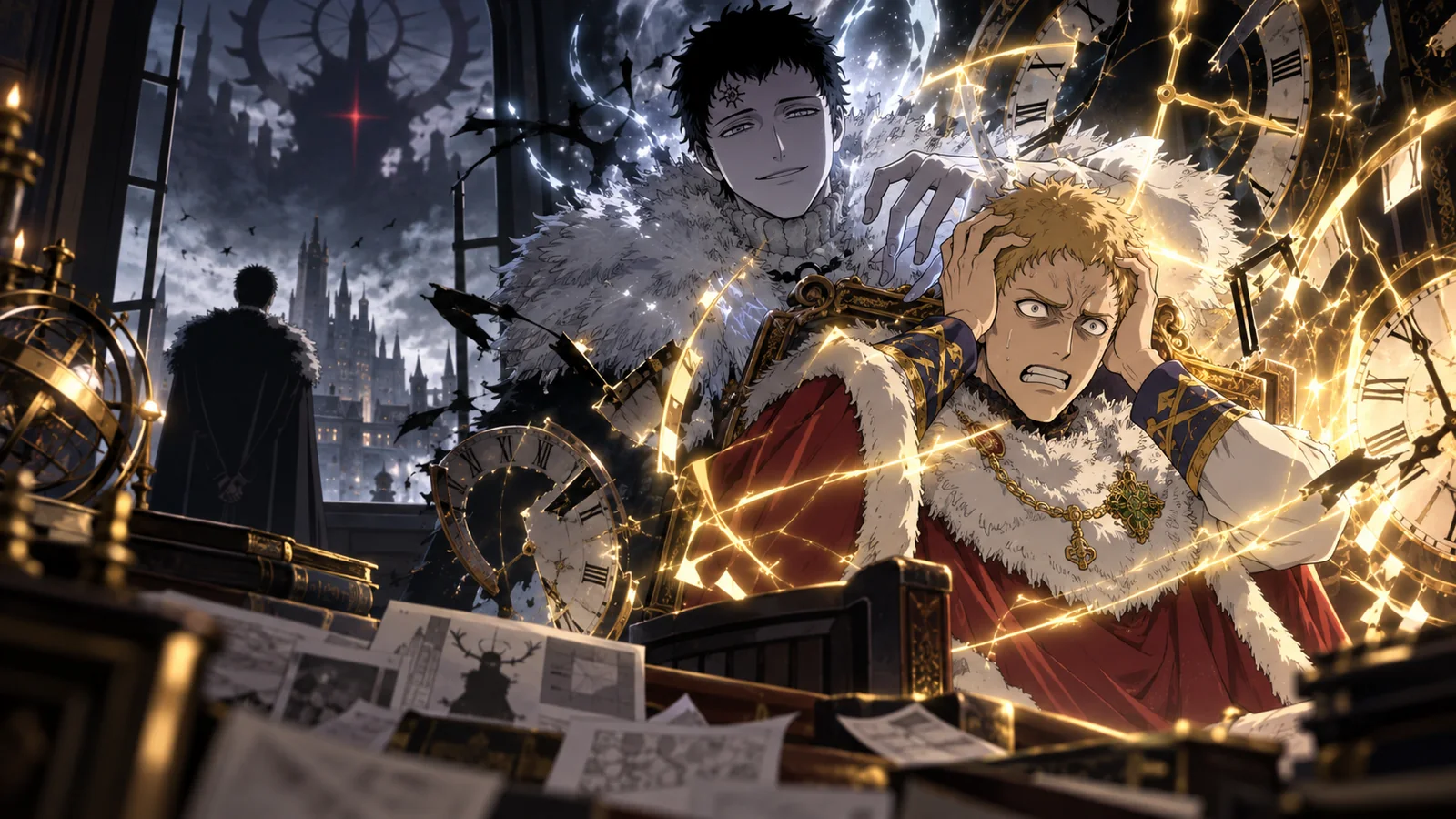
Soul Magic Belongs to Lucius, While Time Magic Leads Back to Astaroth
The twist also explains why Julius's Time Magic is such an important clue.
Lucius's innate attribute is Soul Magic. He can alter souls by touch and later uses that power to reshape people into Paladins, imposing his idea of purified humanity on them.
Astaroth, meanwhile, is the highest-ranking devil associated with Time Magic. Chapter 331 identifies Astaroth as one of the underworld's three rulers alongside Lucifero and Beelzebub, and Damnatio's research connects Astaroth's disappearance to Julius.
Chapter 333 supplies the missing history: Lucius and the other soul within the body formed a connection with Astaroth while seeking answers about their unusual existence.
So Julius's famous Time Magic is not evidence that Julius himself is the mastermind. It is evidence that the shared body is tied to Astaroth. The story turns one of Julius's defining abilities into the clue that exposes Lucius.
It also creates a sharp thematic split. Julius uses power to protect people and create opportunities for the next generation. Lucius combines Time Magic with Soul Magic to control outcomes, overwrite people, and force the world toward a future he selected.
Same body. Very different ideas about what power is for.
Why Julius's Good Deeds Still Count
The Lucius reveal recontextualizes Julius, but it does not erase him.
Julius consistently behaves like someone fascinated by magic and frustrated by the Clover Kingdom's class hierarchy. He values talent in commoners and outsiders, gives unconventional people room to prove themselves, and places enormous trust in captains such as Yami and William.
Those actions fit the Julius who rejects Lucius, not the Lucius who decides that free human beings are too flawed to be trusted.
The contrast becomes especially sharp around Asta.
Lucius considers Asta an unacceptable anomaly because he was born without magic. Asta's existence falls outside the futures Lucius can comfortably control, so Lucius treats him as a defect that must be removed. For more on that foundation, see why Asta has no magic.
Julius does almost the opposite. He is fascinated by Asta's Anti-Magic, encourages his progress, and represents the office Asta wants to earn through effort. Julius's worldview leaves room for an impossible person to change the system. Lucius's worldview tries to eliminate the impossible person so the system cannot surprise him.
Chapter 389 Proves Julius and Lucius Do Not Share the Same Morality
After Asta and Yuno overcome Lucius, Chapter 389 gives Julius and Lucius one last conversation.
Lucius cannot understand why his supposedly perfect plan failed. He believed that controlling humanity's future, removing inequality through forced reconstruction, and ruling the resulting world would create true peace.
Julius rejects that premise.
His answer is that the future cannot be reduced to certainty, even by people who can see possible futures. People keep striving because the result is not guaranteed. Asta and Yuno inspire others through that effort, whereas Lucius tries to replace choice with imposed salvation.
This scene is decisive because the manga lets Julius directly argue against Lucius's ideology. Lucius's soul then disappears.
Julius returns to control of the body, confirming that defeating Lucius does not mean destroying an evil "Julius personality." They are distinct enough that Lucius can be cut away while Julius remains.
Julius's Final Act Settles the Question
Chapter 389 gives Julius one final decision after Lucius is defeated.
Judgment Day has devastated the Clover Kingdom. The capital is ruined. Magic Knights have been killed or mortally wounded. Mereoleona's temporary restoration of fallen Crimson Lions is reaching its limit, meaning fighters without bodies to return to are about to disappear as well.
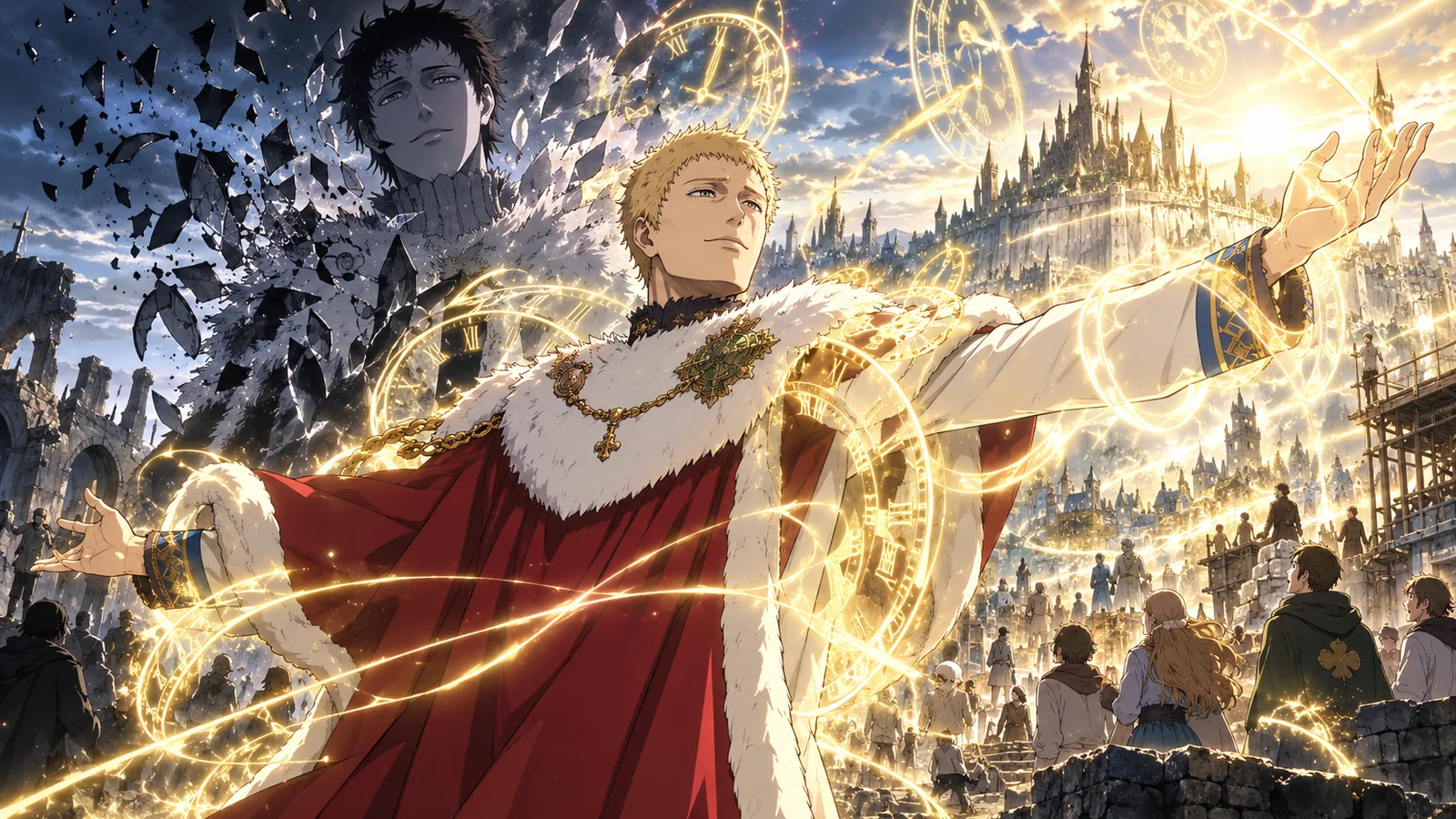
Julius uses Time Magic on an extraordinary scale.
His spell reverses the battle's damage, restores the capital, saves the wounded, and returns fallen people to life by rewinding what happened to them. The restoration reaches cases as severe as the destroyed bodies of the Crimson Lions.
The act costs Julius his life.
Before collapsing, he entrusts the kingdom to the Magic Knights. Chapter 390 establishes the aftermath six months after Julius's death, while Chapters 390 and 391 resolve Asta and Yuno's promised contest for the Wizard King title. Chapter 392 closes the manga, and Shueisha's official guidebook adds Tabata's newly drawn material centered on the 29th Wizard King's coronation.
Julius therefore dies doing the opposite of what Lucius wanted.
Lucius tries to save humanity by taking ownership of everyone's souls and future. Julius saves people by spending his remaining power on them and then leaves the future in their hands.
Does the Twist Make Julius Responsible for Lucius's Actions?
Not in the ordinary moral sense.
They share a body, and Lucius exploits the life Julius built, including the authority attached to the Wizard King. That makes Julius tragically entangled with Lucius's plan. It does not make him a co-conspirator.
Agency is the dividing line.
Julius rejects Lucius when he understands the plan. His conscious Wizard King self is alarmed when Damnatio uncovers the Astaroth connection. He asks to be stopped. Lucius then takes control. When Julius regains agency after Lucius's defeat, he immediately acts to repair the damage and protect the people Lucius tried to dominate.
A theory can still ask how much Lucius quietly shaped Julius's circumstances, career, or opportunities inside the Clover Kingdom. Those are interpretive questions.
What is not theory is Julius's moral opposition to Lucius. Chapters 333 and 389 state that conflict directly.
The Best Reading of Julius After the Ending
Julius Novachrono is a genuine hero whose life was compromised by sharing a body with Lucius Zogratis.
The reveal changes the meaning of things readers thought they understood. Julius's unusual grimoire, Time Magic, missing personal history, and sudden transformation become pieces of a hidden structure connected to Lucius and Astaroth.
But recontextualization is not reversal.
The manga never asks readers to conclude that Julius's kindness was fake or that every heroic choice was secretly Lucius acting. Instead, the same body contains two competing visions of a better world.
Lucius wants peace through control, forced equality, and rewritten souls.
Julius believes people must be allowed to strive toward a future that even he cannot completely predict.
Chapter 389 resolves that conflict with Julius rejecting Lucius one final time and sacrificing himself to undo Judgment Day's destruction. By the completed ending in Chapter 392, the answer is definitive: Lucius was the hidden enemy, while Julius remained the Wizard King Asta and the Magic Knights believed in.